
Class 6 Grammar Worksheet on Animal-Based Idioms

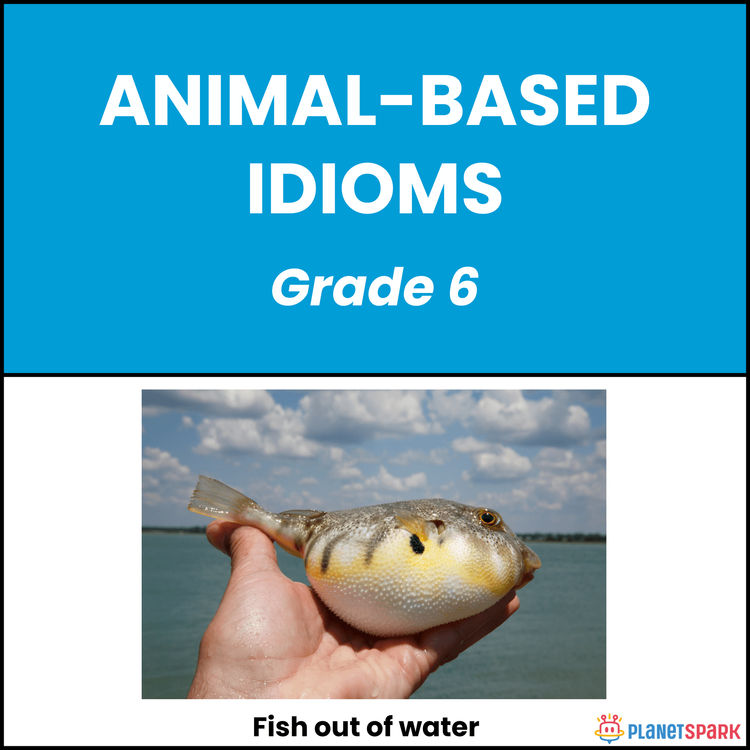
Class 6 Grammar Worksheet on Animal-Based Idioms
Animal-Based Idioms for Class 6
This Grade 6 worksheet helps students understand animal-based idioms with engaging activities such as matching idioms with their meanings, filling in the blanks, and rewriting sentences using the correct idioms. This worksheet enhances their ability to use figurative language in various contexts, improving both comprehension and communication skills.
Why Animal-Based Idioms Matter in Grammar?
Animal-based idioms are commonly used in both spoken and written language, making it important for students to recognize and use them. For Grade 6 learners, this topic is important because:
1. Idioms add creativity and expression to students’ speech and writing.
2. They help improve understanding of figurative language used in everyday conversations.
3. Knowledge of idioms aids in comprehension of texts, literature, and media.
4. Mastering idioms strengthens communication and vocabulary.
What’s Inside This Worksheet?
This worksheet includes five practical exercises that help students master animal-based idioms:
Exercise 1 – Match the Idioms
Students match each animal-related idiom like “dark horse” and “wolf in sheep’s clothing” with their meanings, such as “unexpected” and “danger.”
Exercise 2 – True/False Statements
Learners determine whether the sentences about the use of animal-based idioms are true or false.
Exercise 3 – Fill in the Blanks
Students complete sentences by filling in the correct idiom from a word bank, enhancing their contextual application skills.
Exercise 4 – Multiple Choice Questions
Students select the correct idiom to complete each sentence, reinforcing their understanding of animal-based idioms.
Exercise 5 – Sentence Rewriting
Students rewrite sentences by replacing incorrect idioms with the appropriate ones, ensuring proper idiomatic usage.
Answer Key (For Parents & Educators)
Exercise 1 – Match the Idioms
1. Dark horse – Unexpected
2. Wolf in sheep’s clothing – Danger
3. Raining cats and dogs – Downpour
4. Eager beaver – Hardworking
5. Copy cat – Imitation
6. Busy bee – Busy
7. Crocodile tears – Fake cry
8. Hold your horses – Wait
9. Black sheep – Outcast
10. Elephant in the room – Problem
Exercise 2 – True/False Statements
1. True
2. False
3. False
4. True
5. True
6. False
7. False
8. True
9. False
10. False
Exercise 3 – Fill in the Blanks
1. lone wolf
2. monkey business
3. butterflies in stomach
4. dog tired
5. top dog
6. wild gose chase
7. scapegoat
8. loose cannon
9. cash cow
10. eager beaver
Exercise 4 – Multiple Choice Questions
1. c) cool as cucumber
2. b) monkey business
3. b) ants in his pants
4. d) cold fish
5. a) top dog
6. c) chicken- hearted
7. b) dog tired
8. c) fish out of water
9. a) fishy
10. d) loose cannon
Exercise 5 – Sentence Rewriting
1. Even after working all day, she was dog tired.
2. The children were sitting quietly in class; they were as quiet as mice.
3. He always copies his friends' homework; he is a real copycat.
4. After the long journey, I felt fresh and energetic like a busy bee.
5. She felt very comfortable in the new environment, lke a duck to water.
6. The teacher chose him as the leader because he is the top dog.
7. Riya works very hard and finishes all tasks quickly; she is an eager beaver.
8. He became nervous before the match and had butterflies in his stomach.
9. This product earns the least profit for the company; it is a white elephant.
10. Everyone trusted him because he seemed kind, but he was actually a wolf in sheep's clothing.
Help your child master animal-based idioms with this engaging worksheet.
Frequently Asked Questions
Animal-based idioms are expressions that use animals to convey deeper meanings, helping students enrich their language skills.
Students can recognize animal-based idioms by looking for phrases that use animals in non-literal ways to express an idea.
Understanding animal-based idioms improves students' comprehension, making their language more vivid and interesting.