
Class 6 Worksheet on Past Perfect Continuous

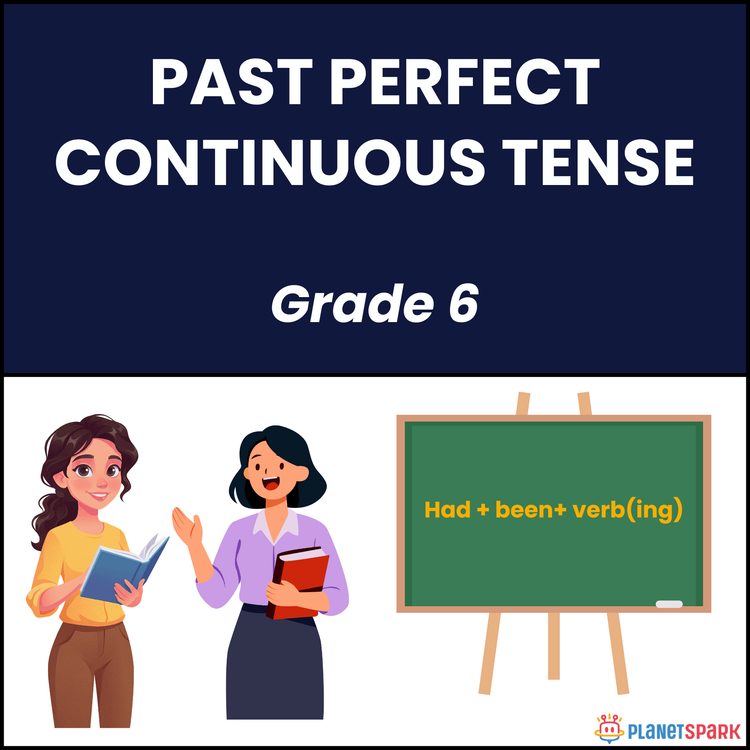
Class 6 Worksheet on Past Perfect Continuous
Master the Flow: Past Perfect Continuous Tense for Class 6
This Grade 6 English grammar worksheet is designed to help students master the Past Perfect Continuous Tense, a key skill for describing ongoing actions in the past. Through a series of engaging exercises—including multiple-choice questions, true/false challenges, fill in the blanks, sentence rewriting, and paragraph completion—learners build strong grammar skills and fluency. By practicing with real-life sentence structures, students learn to accurately express the duration and background of past events.
Why Past Perfect Continuous Matter in Grammar?
The Past Perfect Continuous Tense helps students provide depth and context to their writing. For Grade 6 learners, this topic is important because:
1. It describes an action that was ongoing until another point in the past.
2. It uses the specific structure "had been" plus the "-ing" form of the verb.
3. It helps students clarify the timeline of events in storytelling and academic reports.
4. It strengthens the ability to use time markers like "for" and "since" correctly in a past context.
What’s in This Worksheet?
This worksheet includes five grammar-rich activities that build fluency with the Past Perfect Continuous Tense:
Exercise 1 – Choose the Correct Tense
Students select the correct Past Perfect Continuous form from two options to complete sentences about daily activities like studying or playing. Example: “They had been studying all day.”
Exercise 2 – True or False
Learners evaluate ten sentences to determine if the Past Perfect Continuous tense is used correctly, helping them spot common errors. Example: “I had been eat my lunch” (False).
Exercise 3 – Fill in the Blanks
Students apply the correct verb form (using "have been" as per the exercise instruction) for various actions like working in the garden or learning a language.
Exercise 4 – Sentence Rewriting
Students take simple present tense sentences and transform them into the Past Perfect Continuous tense, building structural flexibility.
Exercise 5 – Paragraph Completion
A narrative passage about Priya’s bakery allows students to apply the tense in a continuous story format, ensuring they understand how it works in context.
Answer Key (For Parents & Educators)
Exercise 1 – Choose the Correct Form
1. a) She had been playing cricket for two hours.
2. b) They had been studying all day.
3. b) Ravi had been reading for an hour.
4. a) We had been waiting for you since morning.
5. b) She had been eating lunch since 1 PM.
6. b) I had been working on this project all week.
7. a) They had been playing football for two hours.
8. a) He had been practicing the piano for years.
9. b) I had been learning French for six months.
10. a) They had been working on the task since morning.
Exercise No. 2 (True or False)
1. T
2. F
3. T
4. T
5. T
6. F
7. T
8. F
9. F
10. T
Exercise 3 – Fill in the Blanks
1. have been playing 2. has been working
3. have been studying 4. has been waiting
5. have been practicing 6. have been learning
7. have been waiting 8. has been running
9. have been eating 10. has been dancing
Exercise 4 – Rewritten Sentences
1. He had been playing football.
2. They had been studying for their exams.
3. They had been playing cricket.
4. We had been working on this project.
5. She had been eating lunch at 1 PM.
6. He had been practicing the piano.
7. They had been walking to school.
8. They had been playing cricket.
9. She had been running in the park.
10. She had been liking to swim.
Exercise 5 – Paragraph Completion
Priya had been working (work) at the bakery for years before she decided to open her own café. By the time I visited her, she had been working (work) there for over 10 years. She had been dreaming (dream) of starting her own business since she was a child. In fact, she had been talking (talk) about it constantly before she took the leap. When we met for coffee, she shared all her experiences. She had been making (make) a lot of mistakes early on, but they had been teaching (teach) her a lot. The staff had been (be) busy in the kitchen when I arrived, as they had been preparing (prepare) for the lunch rush. She had been running (run) the business on her own for a while, but now she has a team to help.
Help your child develop precise storytelling and writing skills by practicing the Past Perfect Continuous Tense with PlanetSpark’s expert educators.
Frequently Asked Questions
The past perfect continuous tense describes actions that were ongoing in the past before another action occurred.
Use "had been" + the -ing form of the verb, e.g., "She had been reading."
Students often confuse it with the past perfect tense, which doesn’t emphasize the ongoing nature of the action.